How InfiVR VR Safety Training is Powering Bajaj Auto’s Next Leap in Workforce Safety
Bajaj Auto Reduces 65% Incidents and Safety Violations using InfiVR AI – 3D Fire and Safety Trainings
Client Background
Bajaj Auto, one of the world’s leading two- and three-wheeler manufacturers, partnered with InfiVR to modernize safety training across its high-risk production facilities. By replacing traditional classroom instruction with immersive AI powered Virtual Reality (VR) simulations, the company significantly improved worker engagement, enhanced knowledge retention, and achieved a measurable 40% reduction in workplace incidents.
The Challenge: Traditional Training Was Not Enough
In a fast-paced manufacturing environment where thousands of employees work near heavy machinery, safety is critical. Conventional safety training was heavily theory and old school focused, leading to several limitations:
- Lack of practical exposure to real emergency situations (fires, machine failures, chemical spills)
- Low engagement and poor long-term retention from classroom-based sessions
- No analytics to measure employee readiness or risk response
- Continued minor incidents and near misses on the shop floor
The Solution: Immersive VR Safety Training
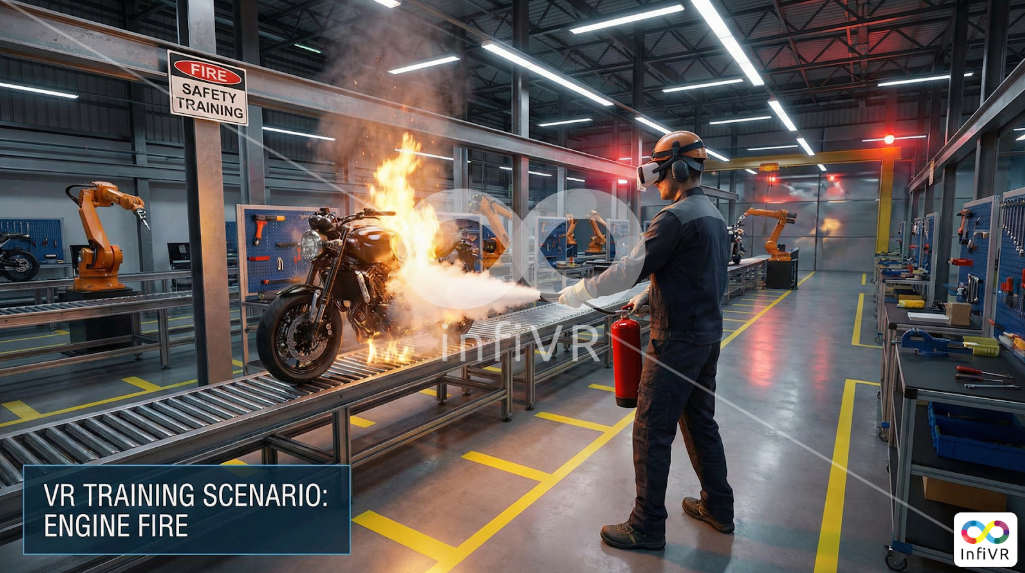
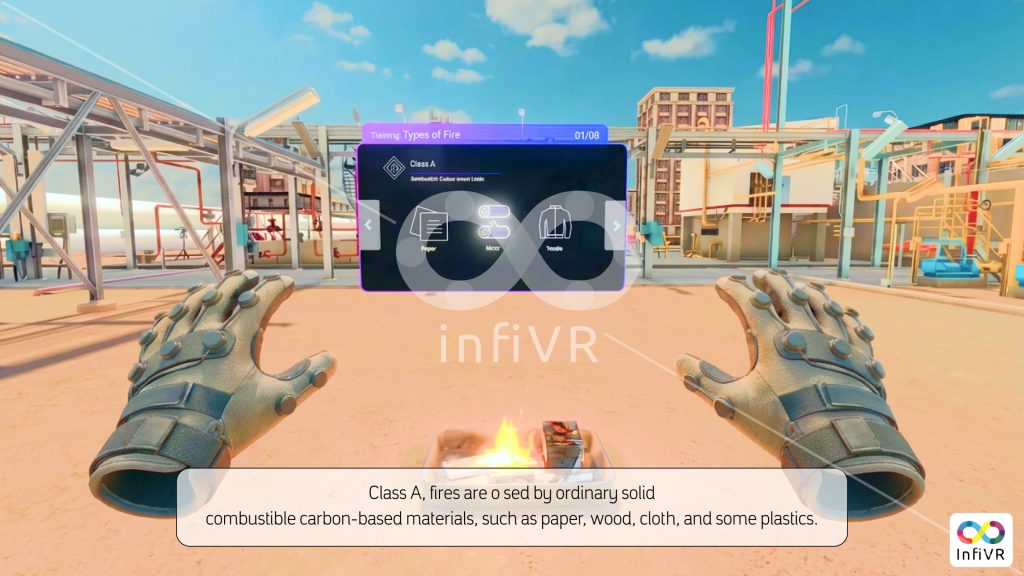
To address these gaps, Bajaj Auto partnered with InfiVR to implement an AI powered 3D immersive safety training platform that allowed hands-on practice without real-world risk.
Key elements of the VR training program:
- High-fidelity simulations that recreated actual assembly lines and maintenance areas
- Risk-free practice of emergency procedures
- Performance tracking based on reaction time, decisions, and accuracy
- Standardized learning across all plant locations
- Faster onboarding for new employee
The Impact: Measurable Improvements in Safety
The transition from traditional training to immersive VR delivered immediate and measurable results.
Emergency Response Case Example
Conventional training, emergency drills were expensive, time-consuming, and limited.
After implementation of InfiVR Training Solutions:
- A lot of employees repeatedly practiced actual like emergency scenarios in shorter cycles
- Safety teams quickly identified hesitation points and knowledge gaps
- Training improved without disrupting production
- Workers showed higher confidence and significantly faster reaction times
- Employees generated a great amount of behaviour change and perception for improved fire safety practices
Performance Metrics
| Metric | Result Achieved | Impact on Operations |
| Safety Improvement | 65% Reduction in reported minor violations and near-miss incidents in the pilot | Directly resulted in a safer working environment and reduced operational costs |
| Training Efficiency | 35% Reduction in the time required for employees to achieve required safety certification. | Saved thousands of hours in annual training time and streamlined the training process. |
| Knowledge Retention | 85% Higher scores in fire hazard identification assessments compared to previous cohorts | Workers demonstrated greater confidence and proficiency in applying safety practices on the shop floor. |
| Worker Engagement | 96% Positive worker satisfaction rating and training session | Led to a stronger, more engaged safety culture across organization |
Conclusion
Bajaj Auto’s adoption of VR-based training shows how immersive technology can transform industrial safety. Instead of passive instruction, employees gain real-world preparedness, enabling them to respond effectively under pressure.
Future Implications
InfiVR’s AI powered immersive training is becoming an essential component of modern safety strategies in fortune 100 companies. Bajaj Auto’s success demonstrates how immersive learning reduces risk, boosts performance, and protects human lives. The partnership with InfiVR is now expanding to include AI-powered predictive safety tools that analyze worker behavior, identify risk indicators, and strengthen proactive safety management.
Reach us at hello@infivr.com
About The Author
